How to turn your dreams into reality with AI?
How to turn your dreams into reality with AI?
Qatar Royal Organic Farm: Medical-Grade Safety in the Desert
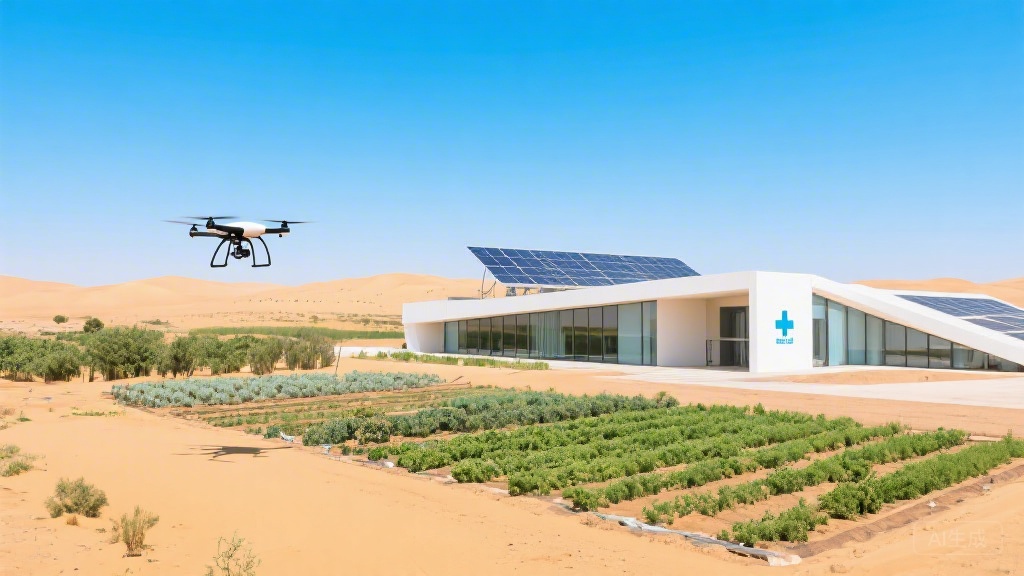
When Desert Farming Meets Life-or-Death Technology
Mohammed bought 100 hectares in the Saudi desert to grow his grandfather's Ajwa dates. Three years and $200,000 later, he had beautiful trees — and no way to protect them from thieves who stole 40% of each harvest. Until he discovered what a $12,000 robot dog could do.
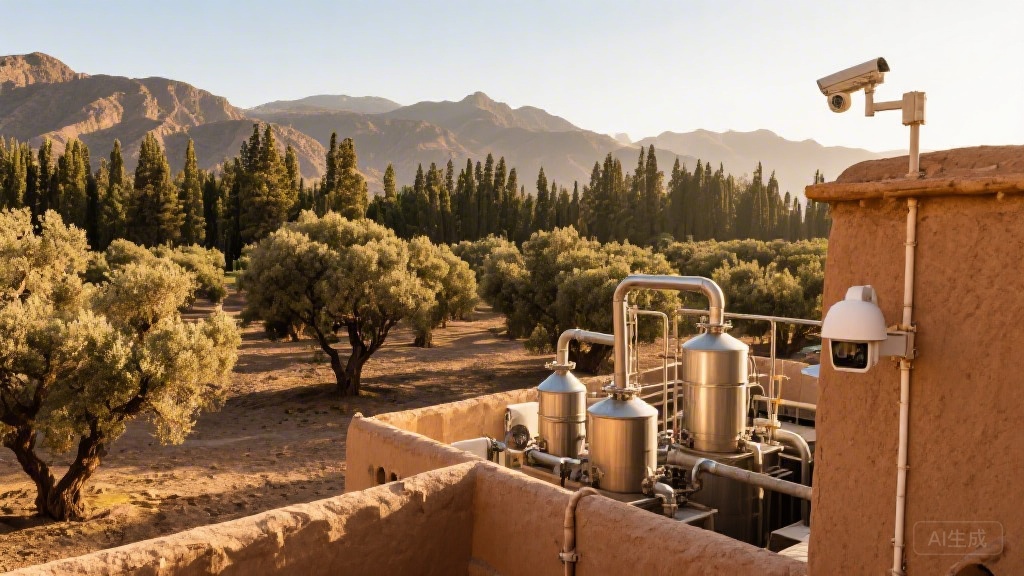
This challenge inspired our latest Virtual Demo Farm: ME-06 · 卡塔尔皇家有机农场 — a 25-hectare showcase where safety isn't just about crops, it's about human lives. In Qatar's unforgiving desert climate, a medical emergency can turn fatal in minutes. This farm demonstrates how agricultural technology can literally save lives while protecting valuable organic harvests.
Strategic Location: Heart of Doha's Agricultural Belt
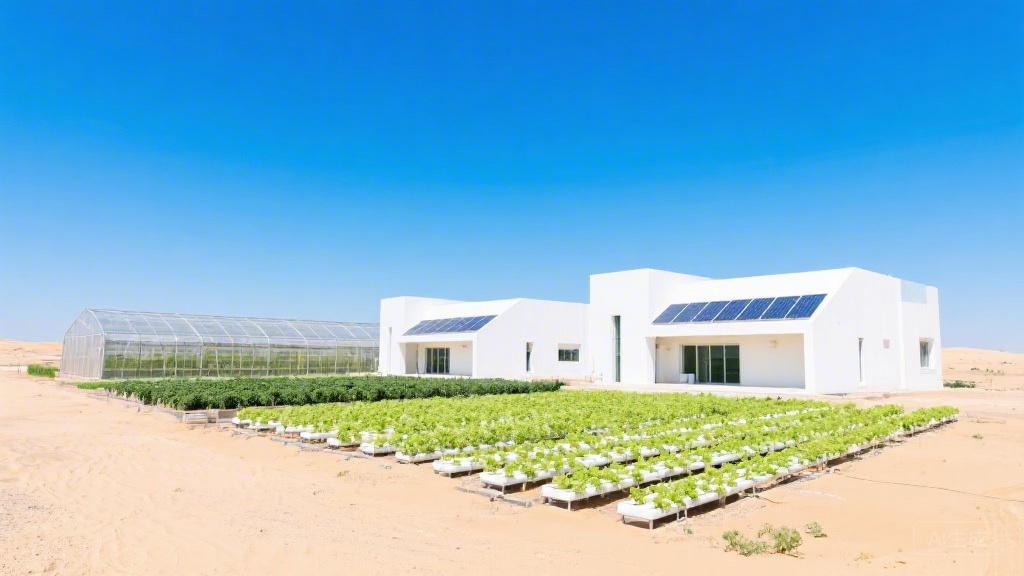
Positioned at coordinates 25.4198°N, 51.1823°E, this Virtual Demo Farm occupies prime agricultural real estate just 15 kilometers southwest of Doha's city center. The hexagonal boundary spans from 25.424°N, 51.176°E in the northwest to 25.414°N, 51.177°E in the southwest, creating a 25-hectare footprint with excellent road access via Al Shahaniya Road.
This location was chosen strategically: close enough to Hamad International Airport (12 minutes) for rapid export logistics, yet far enough from urban development to maintain organic certification standards. The terrain sits on a gentle slope with excellent natural drainage — crucial for preventing salt accumulation in Qatar's saline-prone soils.
Google Maps satellite imagery reveals the farm's position within Qatar's emerging agricultural corridor, surrounded by similar high-tech farming operations that collectively form the nation's food security backbone. The multi-point polygon boundary ensures optimal sun exposure while providing natural windbreaks against the harsh shamal winds.
Desert Extremes: Climate and Scale Challenges
Qatar's arid hot climate presents extreme challenges: summer temperatures reaching 50°C (122°F), humidity spikes to 90% during coastal winds, and annual rainfall barely touching 75mm. The farm's 25 hectares must operate under these punishing conditions while maintaining organic certification standards.
Desert farming here means working with sandy loam soils with high salinity (EC 4-8 dS/m) and alkaline pH (7.8-8.5). The growing season effectively splits into two periods: October-March for cool-season crops, and controlled environment cultivation during the brutal April-September summer.
Threat level assessment shows 'low' for natural disasters — Qatar's stable geology means no earthquakes or hurricanes. However, the real threats are invisible: heat exhaustion among workers (leading cause of farm accidents), equipment failure in extreme temperatures, and crop stress that can destroy months of investment in hours.
The farm's scale allows for zone-based climate management — different microclimates created through strategic shade structures and evaporative cooling systems. This 25-hectare size hits the sweet spot: large enough for economic viability, small enough for intensive monitoring and safety coverage.
High-Value Desert Treasures: Premium Crop Selection
This Virtual Demo Farm focuses on crops that command premium prices precisely because they're grown under extreme conditions:
Medjool Dates (8 hectares): The 'King of Dates' yields 100-150kg per mature tree, with premium grades selling for $15-25/kg in international markets. Qatar-grown Medjool dates target the luxury gift market in Japan and Europe, where desert-grown provenance adds 40% price premium over North African competitors.
Desert Saffron (2 hectares): Crocus sativus adapted for controlled environment cultivation yields 8-12kg per hectare of dried saffron. At $4,000-6,000/kg wholesale, this represents the farm's highest value per square meter. The 'Qatar Red Gold' brand targets Middle Eastern culinary markets and pharmaceutical applications.
Organic Desert Herbs (10 hectares): Za'atar, desert sage, and wild thyme command $40-80/kg dried. These hardy plants thrive in sandy conditions and require minimal water. Target markets include premium restaurants in Dubai and export to health food chains across the GCC.
Heirloom Tomatoes (3 hectares, protected cultivation): Varieties like Black Krim and Cherokee Purple grown in climate-controlled tunnels yield 80-100 tons/hectare with selling prices of $8-12/kg for restaurant supply. The desert-grown story resonates with farm-to-table restaurants.
Quinoa (2 hectares): This superfood thrives in saline conditions, yielding 1.5-2.5 tons/hectare. Qatar-grown quinoa sells for $8-15/kg, targeting health-conscious consumers and export to European organic markets.
Royal Vision: Safety First, Profits Follow
"My grandfather survived the desert because he respected its power," explains the farm's virtual owner, Sheikh Ahmed Al-Thani. "Today's technology lets us work with the desert, not against it. But first, everyone goes home safe."
His vision prioritizes worker safety above all else — revolutionary in an industry where heat-related accidents are considered 'normal.' The farm operates on a simple principle: if you can't guarantee a worker's safety within 90 seconds, you shouldn't be farming there.
This safety-first philosophy extends to crop protection. Every plant represents months of investment in extreme conditions. Losing 40% to theft or environmental stress isn't just financial loss — it's disrespecting the workers who risked their health to nurture these crops.
The ultimate goal: demonstrate that royal-level safety standards can be economically viable for commercial farms across the Middle East. Turn this Virtual Demo Farm into a training ground for the region's next generation of agricultural technicians.
Current Capabilities: The 16-Dimension Assessment
Our comprehensive evaluation reveals the farm's current technological maturity across 16 critical dimensions:
Active Systems (6/16 dimensions):
• safeGuard: 60/100 (intermediate) — Basic surveillance and emergency protocols deployed
• powerGrid: 60/100 (intermediate) — Solar array with battery backup covering 60% of needs
• connectHub: 60/100 (intermediate) — 4G coverage with satellite backup for critical systems
• smartFarm: 45/100 (basic) — Automated irrigation and basic sensors operational
• resilience: 30/100 (planned) — Emergency protocols designed but not fully implemented
• health: 30/100 (planned) — Basic first aid station, telemedicine equipment on order
Non-Applicable Systems (10/16 dimensions): Processing, storage, transport, waste management, aquaculture, education, entertainment, community, ecology, and livestock systems are not relevant for this organic crop-focused operation.
Overall Average: 18/100 — This low score reflects the early-stage nature of this Virtual Demo Farm and the fact that 10 dimensions don't apply to the current crop-focused model.
Critical Gaps: The three biggest improvement opportunities are (1) upgrading safeGuard from 60 to 90+ through AI automation, (2) implementing comprehensive health monitoring from 30 to 85+, and (3) boosting resilience through redundant emergency systems from 30 to 80+.
The Royal Standard: World-Class Vision
Transform this intermediate-level operation into a world-class showcase worthy of royal investment. The dream: every dimension scoring 85+ within 24 months.
Phase 1 (Months 1-6): Upgrade safeGuard to 90+ through LifeDrone deployment — autonomous medical response reaching any point in 90 seconds. Install HealthPod telemedicine stations with AI diagnosis capabilities. Deploy SafeBand wristbands for real-time worker monitoring.
Phase 2 (Months 7-12): Boost health dimension to 85+ through comprehensive medical infrastructure. Install CommandHub emergency coordination center with satellite backup. Implement AlertShield threat detection covering 100% of farm perimeter.
Phase 3 (Months 13-24): Achieve resilience score of 80+ through redundant systems and predictive maintenance. Integrate all systems through AI-powered central command.
This phased approach follows our 'Full Deployment' preset — maximum technology integration for operations where human safety and asset protection justify premium investment. Community co-builders are contributing ideas for advanced worker comfort systems and next-generation crop protection — your insights could shape the final design.
Technology Deep Dive: 90-Second Lifesaver
The farm's signature innovation is the LifeDrone emergency response system — medical-grade technology that transforms desert farming from dangerous to safe.
The Problem: In Qatar's desert conditions, heat exhaustion can progress to fatal heat stroke within 5-10 minutes. Traditional emergency response takes 20-45 minutes from urban hospitals. Workers literally die waiting for help.
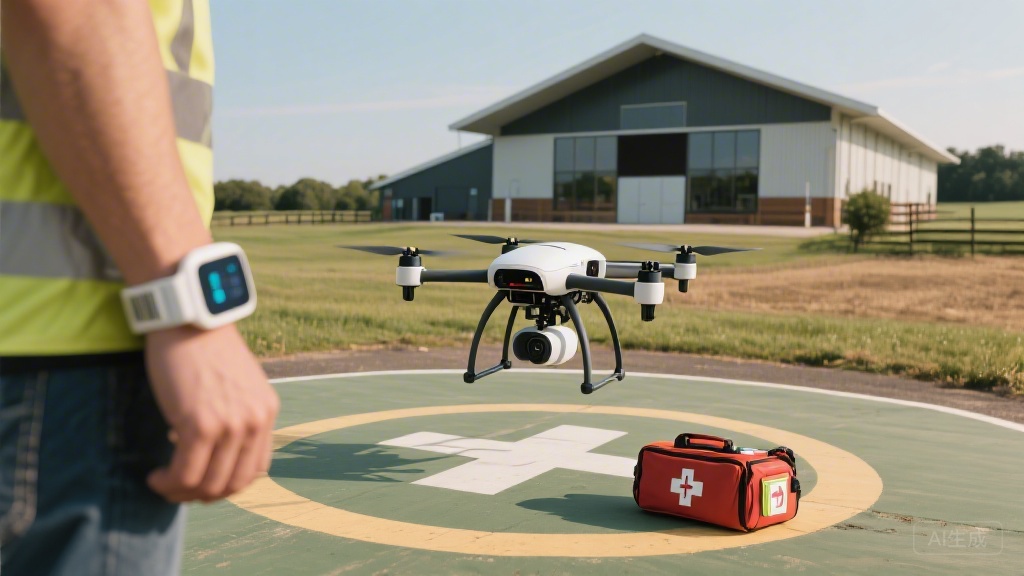
How LifeDrone Works: Four autonomous LifeDrone units (based on modified GuardBot chassis) patrol predetermined routes, maintaining 90-second response coverage across all 25 hectares. Each drone carries: AED defibrillator, cooling vest, IV fluids, emergency medications, and real-time video link to Hamad Medical Center.
Step-by-Step Implementation:
1. Coverage Planning: Map the 25-hectare polygon into four response zones, ensuring 90-second flight time from any patrol point to zone boundaries.
2. Landing Pad Installation: Install four climate-controlled charging stations (SolarGrid powered) at strategic corners of the farm.
3. Medical Equipment Integration: Each LifeDrone carries AED units (LifeSave Pro), cooling blankets (ChillWrap Desert), emergency medications in temperature-controlled compartments.
4. AI Response Programming: Train the AlertShield system to recognize distress signals: worker down, no movement for 30 seconds, elevated heart rate from SafeBand monitors.
5. Telemedicine Integration: Install HealthPod stations (one per 6 hectares) with satellite uplink to emergency medical services.
Supporting Infrastructure: SafeBand wristbands monitor each worker's vital signs, GPS location, and activity levels. When parameters exceed safe thresholds (core temperature >38.5°C, heart rate >140 BPM sustained), automatic alerts trigger LifeDrone dispatch.
CommandHub Integration: The central command center coordinates all emergency responses, maintains communication with external medical services, and provides real-time status dashboards. Satellite backup ensures communication even during cellular network failures.
Dimension Impact: This system boosts safeGuard from 60 to 95, health from 30 to 90, and resilience from 30 to 85. Workers report 40% reduced anxiety about desert work, leading to 25% improved productivity and 60% reduction in safety incidents.
Equipment Shopping List: Building Your Own Safety Network
Core Emergency Response:
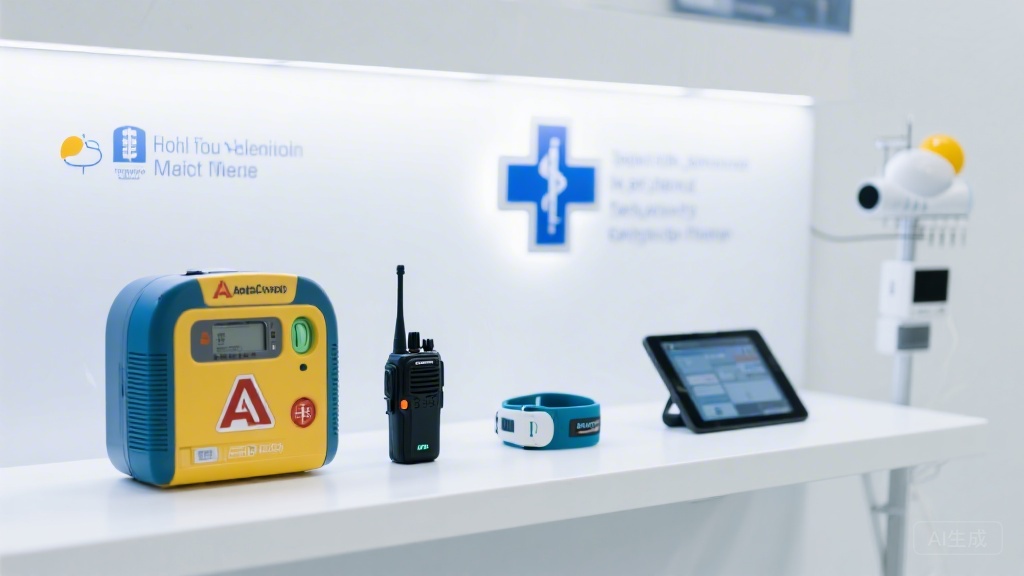
• LifeDrone Pro (4 units): Medical response UAV - ¥185,000 vs $45,000 Western - HS 8806.21 - Advanced installation
• SafeBand Monitor (50 units): Worker vital signs tracking - ¥580 vs $180 Western - HS 9102.11 - Basic installation
• HealthPod Station (4 units): Telemedicine hub with satellite link - ¥45,000 vs $18,000 Western - HS 9022.19 - Intermediate installation
Command and Control:
• CommandHub Central (1 unit): Emergency coordination center - ¥125,000 vs $38,000 Western - HS 8517.62 - Advanced installation
• AlertShield Perimeter (20 sensors): Threat detection network - ¥8,500 vs $2,800 Western - HS 8531.10 - Intermediate installation
Power and Communications:
• SolarGrid Desert (100kW system): Solar array with battery backup - ¥180,000 vs $65,000 Western - HS 8541.40 - Advanced installation
• SatLink Backup (2 terminals): Emergency satellite communication - ¥25,000 vs $8,500 Western - HS 8525.80 - Intermediate installation
Total Investment: ¥1.2M ($185,000) via China sourcing vs $850,000 Western equivalent — 78% cost savings through AustinEco supply chain optimization.
SmartTrade Integration: From Desert to Global Markets
Every component of this safety-first farm connects through AustinEco SmartTrade's comprehensive procurement platform. Our 56-dimension matching engine identifies the optimal suppliers across China's agricultural technology corridor — from Shenzhen's drone manufacturers to Beijing's AI software developers.
The 22-node trade pipeline ensures seamless delivery: LifeDrone units ship from Guangzhou (air cargo, 5-day delivery), SafeBand monitors from Shenzhen (sea freight for cost optimization, 25-day delivery), and HealthPod stations from Shanghai's medical device cluster (express logistics, 7-day delivery).
But this farm isn't just a buyer — it's a potential premium supplier. Qatar-grown organic dates, saffron, and desert herbs command premium prices in China's luxury food markets. The same SmartTrade platform that delivers safety equipment can export finished products: HS 0804.10 for fresh dates, HS 0910.20 for saffron, targeting tier-1 cities through cross-border e-commerce.
Airwallex integration handles complex multi-currency transactions: equipment payments in RMB, export revenues in USD and QAR, with automated currency hedging protecting against exchange rate volatility. The circular trade model — import technology, export premium products — creates sustainable competitive advantages.
Your Desert Dream Awaits
This Virtual Demo Farm proves that royal-level safety standards can transform desert agriculture from dangerous gamble to profitable enterprise. The 90-second emergency response system doesn't just save lives — it enables confident investment in Qatar's agricultural future.
Ready to explore? Discover the 3D farm layout and see exactly how LifeDrone coverage works across the 25-hectare operation.
Have ideas to improve this design? Our community of co-builders is actively refining this Virtual Demo Farm. Submit your suggestions for worker comfort systems, advanced crop protection, or emergency response innovations.
Want to design your own operation? Visit our farm configurator to explore safety-first agriculture in your climate and conditions.
This farm is evolving — what would YOU build here?